A scene from Pen-Tor sitcom
According to Wikipedia, sitcom stands for a situation comedy located on a fixed set of characters and scenes. Advertising and product tie-in in Thai sitcoms are massive. You can notice that Thai sitcom mostly contains at least a character who works in a convenient store in order to tie-in products in the store.
There are three kinds of product tie-in...
(Credit to this article: http://positioningmag.com/10558)
1. Product placement - The product is placed still

(Nut-Gup-Nut Sitcom นัดกับนัด 2007)
2. Product movement - The characters in the series hold the product


(Sotus The Series 2016 / characters hold and drink Coke)
3. Product Experience - The characters talk about the properties of the product.
For example, in Diary Tootsies The Series, a character suggested an intro to a snack that if you guys have never tried this you are outdated because everyone has it (makes viewers feel like if they haven't tasted it they are outdated) After another character tasted it, he said it was delicious.


Another example of product experience is in Sotus The Series...
A man said that he has been reading for ages but still couldn't remember the lesson. Then, another man offered him a seaweed saying that it contains Iodine which helps memorization. The first man then ate it.


Some examples of Thai sitcoms that contain a lot of product placements...
1. Pen-Tor sitcom เป็นต่อ
An episode as an example: https://www.youtube.com/watch?v=5sAZiouoYZA
As I mentioned before that Thai sitcom mostly contains at least a character who works in a convenient store in order to tie-in products in the store.You can notice even just in the first part of the episode that in the store there are many brands showing up.

2. Heng Heng Heng sitcom เฮงเฮงเฮง
Another minimart scene...

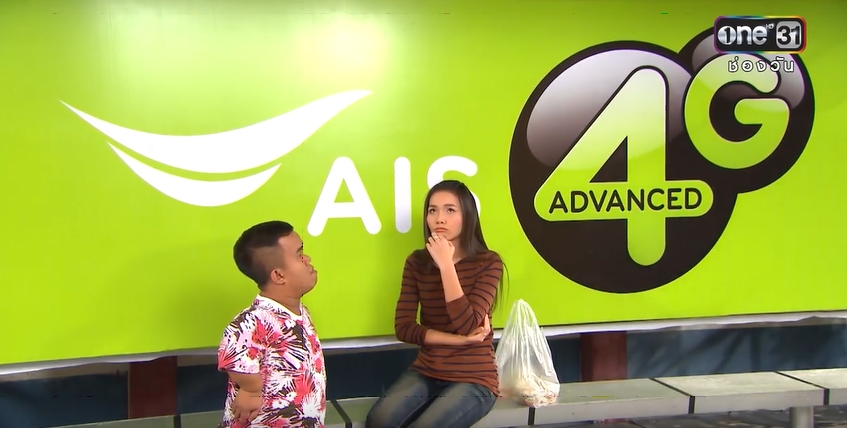
Even a scene at the bus stop...
3. Poo-Gong-Jao-Sa-Nae ผู้กองเจ้าเสน่ห์

Some examples showing bad product tie-in tactics from The Face Thailand Season 3...
1. Janey, a guest master class teacher, who is supposed to teach contestants how to improve themselves in acting or modeling but what she does is just tie-in because she is a brand ambassador of Maybelline New York cosmetics. She had been talking about the product and demonstrating it for ages instead of getting deeply into the lesson of how to create inner through eye contacts. (The tie-in probably takes longer time than the main lesson)


2. There is a setting scene for a contestant to impromptu get up to take coconut drinks in the fridge... Are you serious? It suddenly came out of no where. It is unrelated and I wonder why they need to drink it now. It is so obvious and ridiculous because the contestant just said..."we were going to get back to the competition soon, let me get you guys some drinks..." Doesn't this sound odd for you!?


In conclusion, one challenging key in product tie-in marketing is the content; how well marketers will make it blend into the stories without making audience feel annoyed and to make it blend into the taste and culture of Thai audience. If it is presented too forcefully and too directly then it becomes a hard sell which is not so good for today's viewers and consumers might create negative attitude towards the product. Some agencies aren't successful in doing that. For example, The Face Thailand (which I already mentioned above), a modeling reality TV show focusing on three model mentors coaching contestants and competing in each episode, in season 3 contains too many tie-ins that make the main point or original gist of the show drop and distorted. This is because loyal viewers want to watch the show to see professional and challenging master classes ,campaigns and what it is like to be in fashion and modeling industry not to see merely advertising.